I’ve always believed flour should be as close to nature as possible. That’s why I mill my wheat berries just before baking. It’s a simple process that…
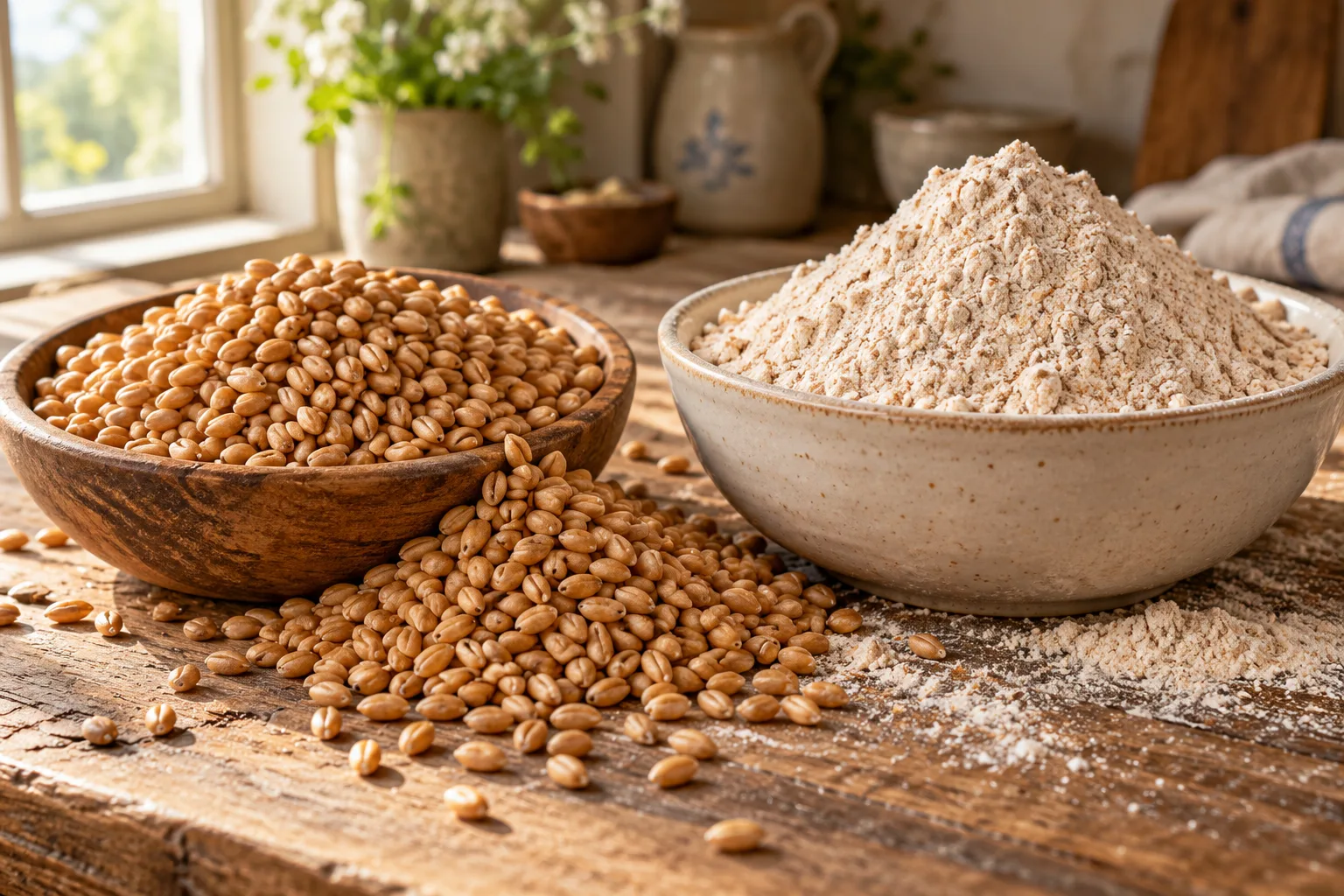
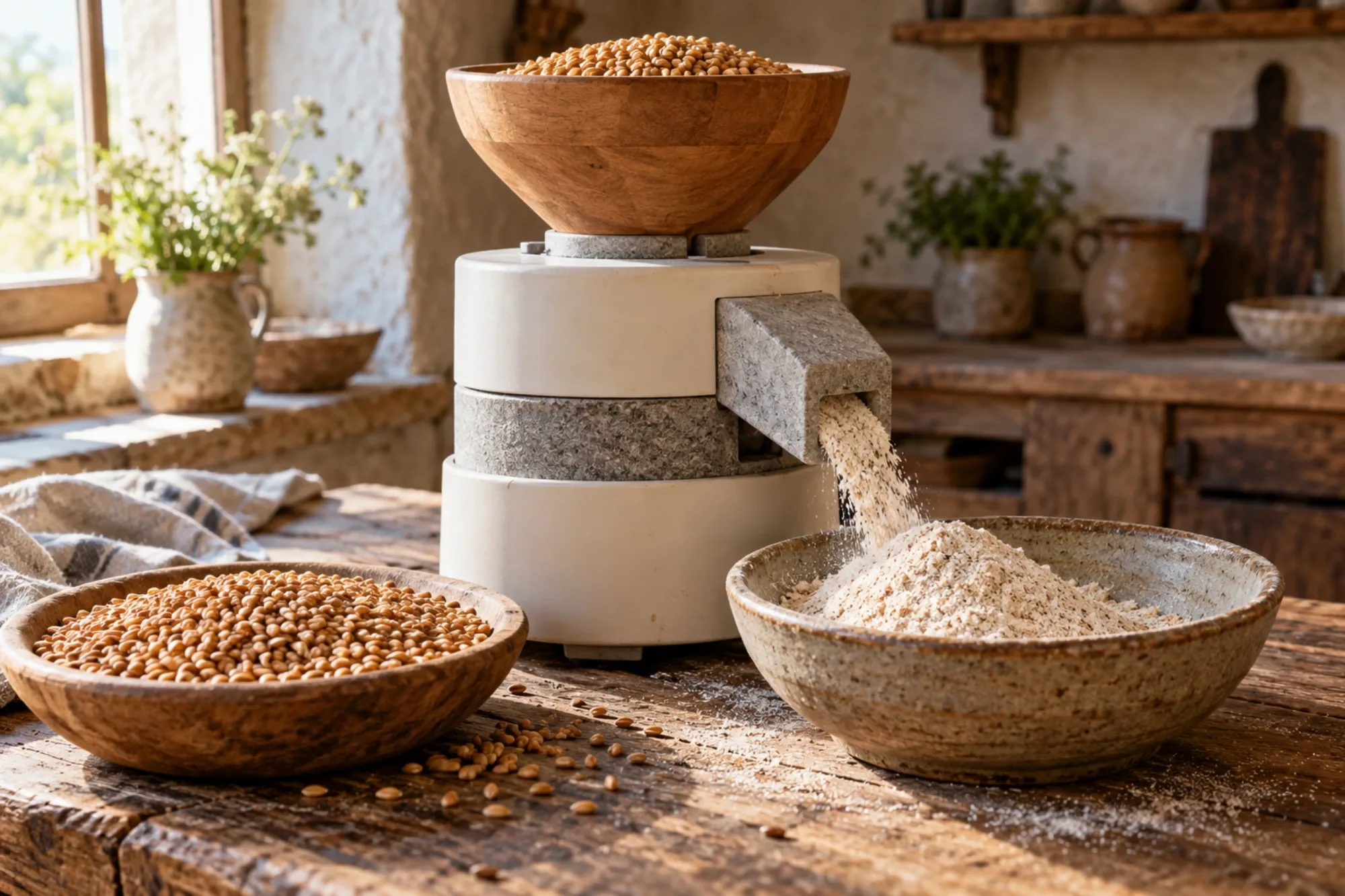
I’ve always believed flour should be as close to nature as possible. That’s why I mill my wheat berries just before baking. It’s a simple process that keeps all parts of the grain intact. Nothing added. Nothing taken away. Some people are surprised to learn how different this is from commercial flour, so here’s a calm look at the facts — no drama, no health claims, just what we know from credible sources.
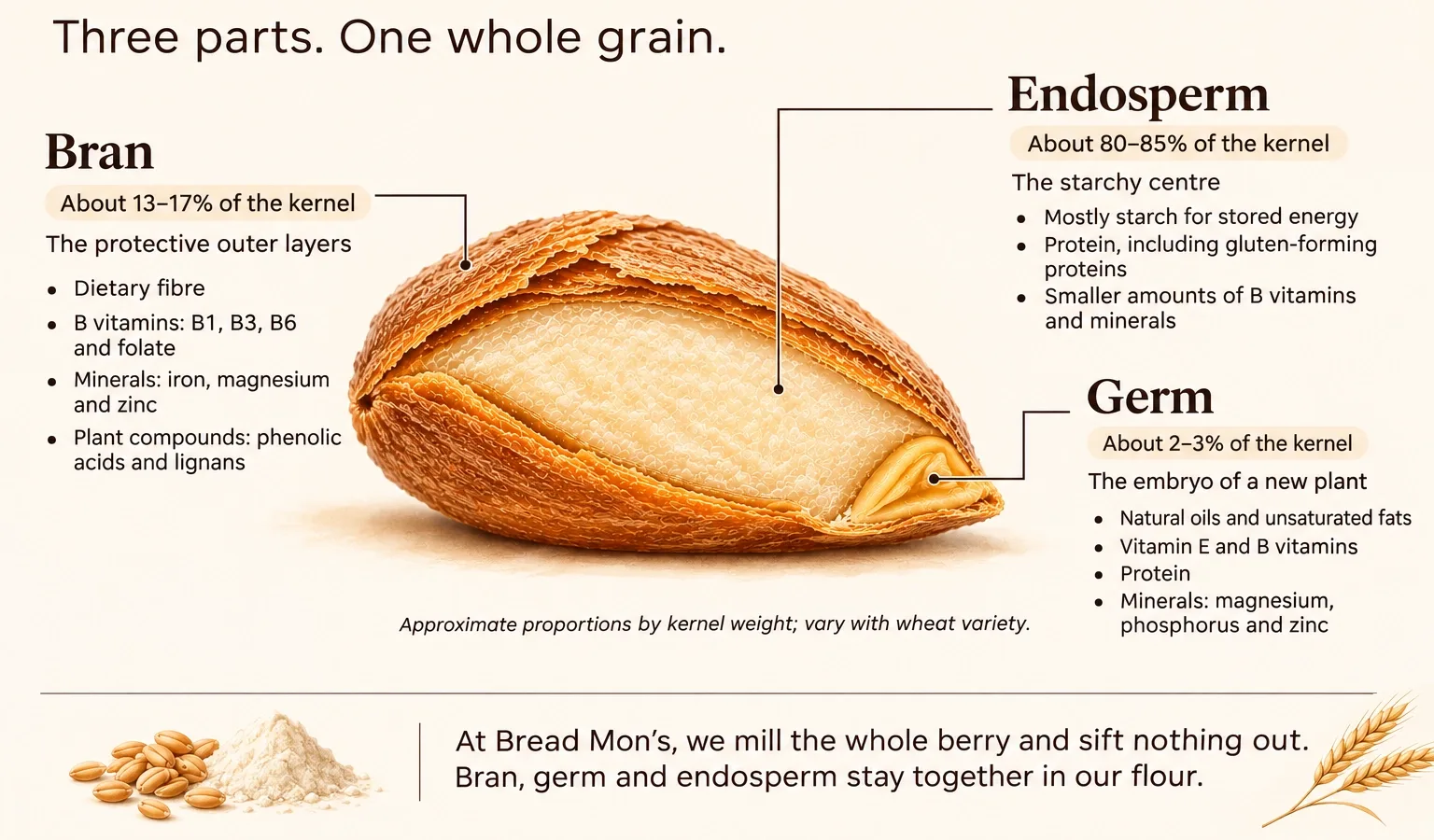
What Fresh-Milled Flour Really Is When whole wheat berries are milled at home, the flour contains:
- the bran (where the fibre is)
- the germ (where the vitamins, minerals, and natural oils live)
- the endosperm (the starch and protein)
- You’re getting the entire grain — as nature produced it.
According to Harvard’s School of Public Health, removing the bran and germ (which happens in refined flour) eliminates more than half the B vitamins, most of the minerals, nearly all the fibre, and almost all the vitamin E. Commercial white flour removes these parts so the flour can last months on the shelf. (Source: Harvard T.H. Chan School of Public Health)
Fresh flour hasn’t sat around long enough to lose any of those natural nutrients. When it goes straight from the mill to the bowl, it’s still vibrant — and that’s something you can taste and smell.
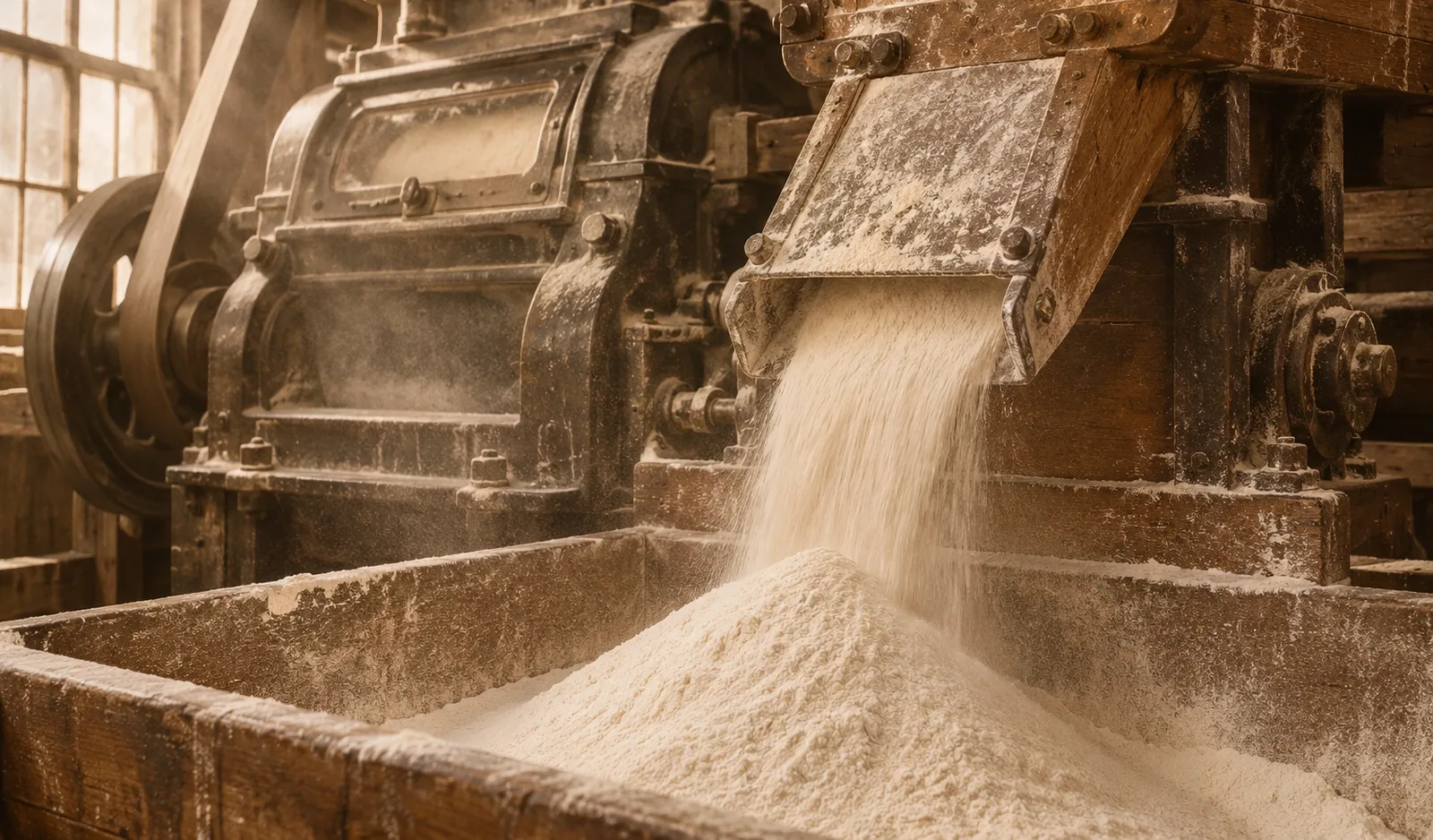
What Happens During Commercial Milling
Commercial flour isn’t “bad”; it’s designed for convenience and consistency.
To create a product that stores well and works the same in every kitchen, mills usually:
- remove the bran
- remove the germ
- sometimes bleach the flour for colour and texture
- add vitamins and iron back in later (enrichment)
- Enrichment helps, but only a few nutrients are added back — not the full spectrum that whole grain naturally carries. Fibre is not added back at all. (Sources: USDA Milling Standards; FDA Fortification Guidelines)
Again, this isn’t about judgment — it’s simply how the modern system works.
Glyphosate and Additives My wheat berries come from multi-generational family farmers who keep their fields certified glyphosate-free. That’s a personal choice because I prefer flour that contains only what the grain naturally provides.
Commercial flour often comes from large commodity systems where traceability is difficult. Some regions also allow glyphosate use before harvest as a drying agent. Regulatory bodies say the residues are low, but it’s not something I want in my baking. (Sources: EPA, Canadian Food Inspection Agency)
This point is about preference and transparency, not fear.
The anatomy of a wheat berry
Fresh-Milled vs. Commercial Flour: The Real Difference
Put simply:
Fresh-Milled Flour
Contains the whole grain Naturally rich in fibre, vitamins, minerals, healthy oils Has no bleaching or additives Nutrients are at their peak because it hasn’t been sitting for months Offers a fuller, warmer flavour
Commercial Flour
Convenient, consistent, affordable Shelf-stable due to removal of the germ and its oils Often bleached or enriched Lower in fibre and certain natural nutrients Part of a modern food system designed for mass production Neither is “good” or “bad.” They simply serve different purposes.
Why I Choose Fresh-Milled
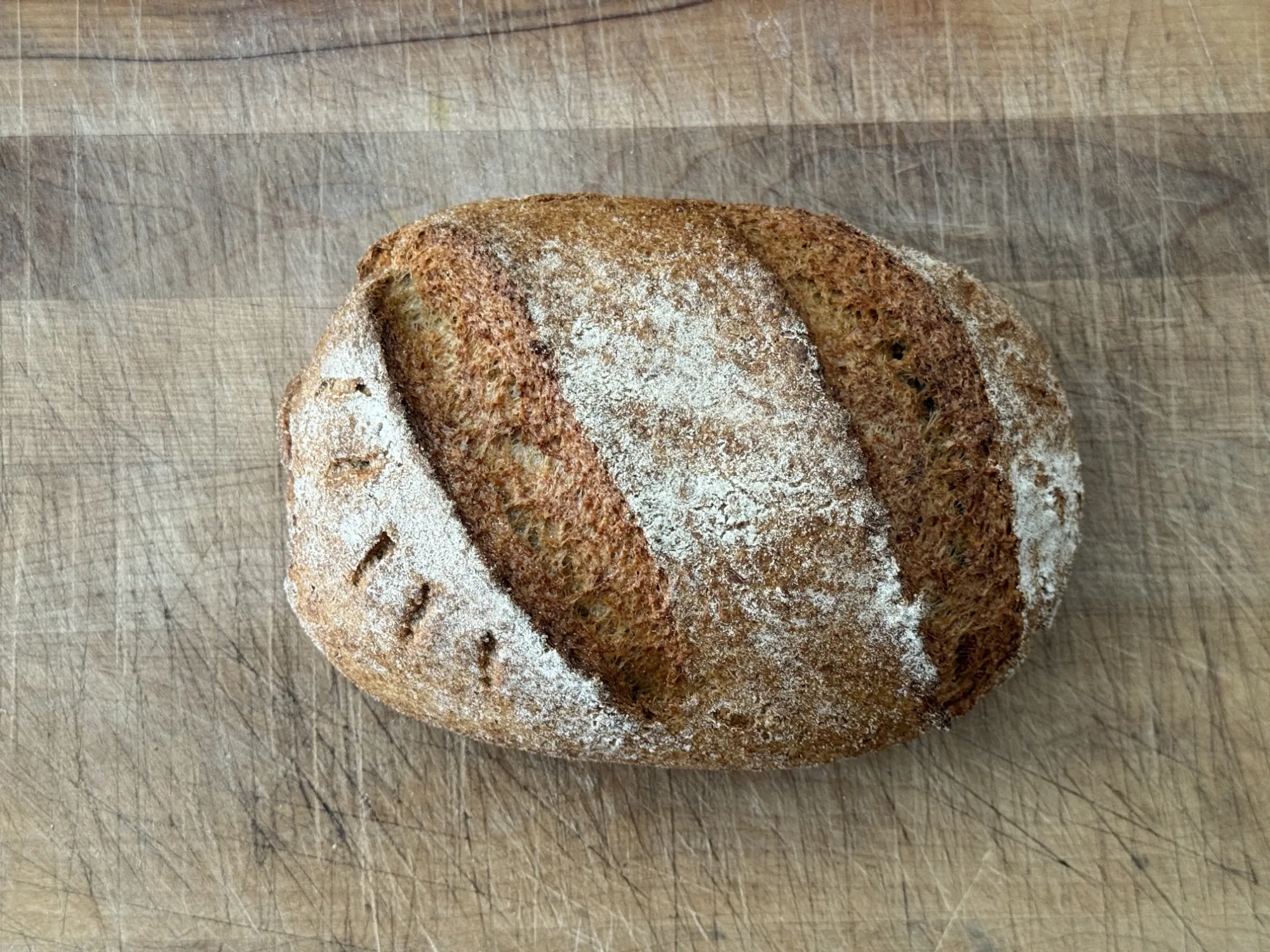
For me, it comes down to integrity and intention. I like to work with flour that still carries everything the wheat berry offers. I enjoy knowing where my grain comes from, and I value the aroma, flavour, and texture it gives my bread — especially my sourdough.
But commercial flour has its place too. It’s easy, predictable, and perfect for many everyday bakers.
In the end, the choice is a simple one:
Do you prefer a natural, whole-food flour…
or the convenience of a modern, processed flour?
There’s no wrong answer — only the answer that fits your kitchen and your values.
My work with Bread Mon’s leans toward the traditional path: freshly milled, chemical-free, and full of the grain’s original character. It’s a way of honouring both the wheat and the people who choose to enjoy my bread.